Start Mac in Safe Mode. This troubleshooting startup environment restricts most startup items and limits the operating system to use only the basic OS core. If you can start the Mac in Safe Mode and then use the app in question without problems, the likely cause is not permissions or preference files but a conflict with another app or a startup.
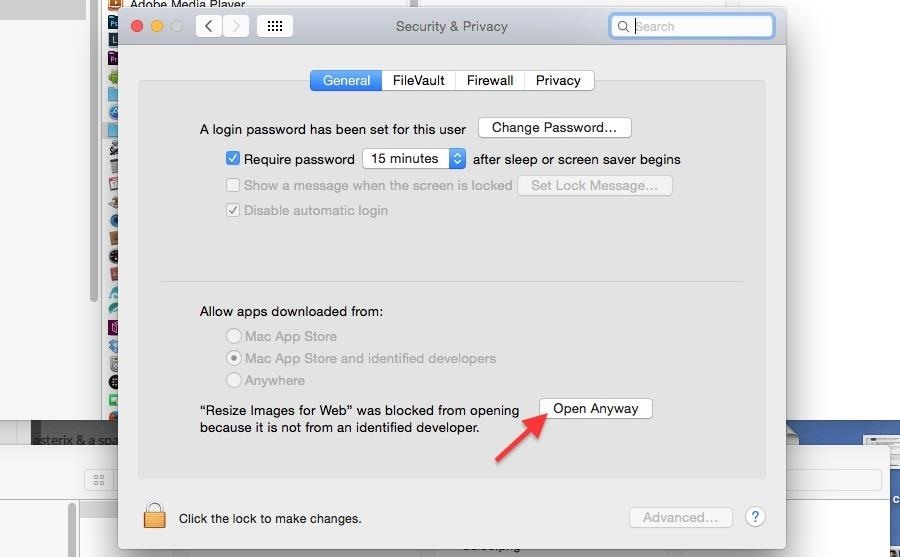
- Open System Preferences. Go to the Security & Privacy tab. Click on the lockand enter your password so you can make changes. Change the setting for 'Allow apps downloaded from' to 'App Store.
- These will allow you to run a virtual device controlled by Android on your Mac, PC. Using this you can play various games and use other apps just like you would on an Android phone or tablet. Before using an emulator, ensure that your Mac, PC has enough RAM and CPU resources to support its functioning without affecting Mac’s performance.
The Terminal app allows you to control your Mac using a command prompt. Why would you want to do that? Well, perhaps because you’re used to working on a command line in a Unix-based system and prefer to work that way. Terminal is a Mac command line interface. There are several advantages to using Terminal to accomplish some tasks — it’s usually quicker, for example. In order to use it, however, you’ll need to get to grips with its basic commands and functions. Once you’ve done that, you can dig deeper and learn more commands and use your Mac’s command prompt for more complex, as well as some fun, tasks.
Curated Mac apps that keep your Mac’s performance under control. Avoid Terminal commands, avoid trouble.
Download FreeHow to open Terminal on Mac
The Terminal app is in the Utilities folder in Applications. To open it, either open your Applications folder, then open Utilities and double-click on Terminal, or press Command - spacebar to launch Spotlight and type 'Terminal,' then double-click the search result.
You’ll see a small window with a white background open on your desktop. In the title bar are your username, the word 'bash' and the dimensions of the window in pixels. Bash stands for 'Bourne again shell'. There are a number of different shells that can run Unix commands, and on the Mac Bash is the one used by Terminal.
If you want to make the window bigger, click on the bottom right corner and drag it outwards. If you don’t like the black text on a white background, go to the Shell menu, choose New Window and select from the options in the list.
If Terminal feels complicated or you have issues with the set-up, let us tell you right away that there are alternatives. MacPilot allows to get access to over 1,200 macOS features without memorizing any commands. Basically, a third-party Terminal for Mac that acts like Finder.
For Mac monitoring features, try iStat Menus. The app collects data like CPU load, disk activity, network usage, and more — all of which accessible from your menu bar.
Basic Mac commands in Terminal
The quickest way to get to know Terminal and understand how it works is to start using it. But before we do that, it’s worth spending a little time getting to know how commands work. To run a command, you just type it at the cursor and hit Return to execute.
Every command is made up of three elements: the command itself, an argument which tells the command what resource it should operate on, and an option that modifies the output. So, for example, to move a file from one folder to another on your Mac, you’d use the move command 'mv' and then type the location of the file you want to move, including the file name and the location where you want to move it to.
Let’s try it.
Type cd ~/Documentsthen and press Return to navigate to your Home folder.
Type lsthen Return (you type Return after every command).
You should now see a list of all the files in your Documents folder — ls is the command for listing files.
To see a list of all the commands available in Terminal, hold down the Escape key and then press y when you see a question asking if you want to see all the possibilities. To see more commands, press Return.
Unix has its own built-in manual. So, to learn more about a command type man [name of command], where 'command' is the name of the command you want find out more about.
Additionally, they have been constructed using the best quality of materials that offer increased longevity. You can, therefore, connect them with speakers while some come with built-in speakers for enhanced sound quality.As you shop for the belt drive turntables, you should look for things like operating speeds, built, design, compatibility, and price among others. That said, the belt drive turntables are easy to play and operate smoothly to deliver amazing sound system. Mac game operate pulleys and fulcrums. Moreover, they are widely compatible with most devices since they support both wired and wireless connections.
Terminal rules
There are a few things you need to bear in mind when you’re typing commands in Terminal, or any other command-line tool. Firstly, every character matters, including spaces. So when you’re copying a command you see here, make sure you include the spaces and that characters are in the correct case.
You can’t use a mouse or trackpad in Terminal, but you can navigate using the arrow keys. If you want to re-run a command, tap the up arrow key until you reach it, then press Return. To interrupt a command that’s already running, type Control-C.
Commands are always executed in the current location. So, if you don’t specify a location in the command, it will run wherever you last moved to or where the last command was run. Use the cdcommand, followed by a directory path, like in Step 1 above, to specify the folder where you want a command to run.
There is another way to specify a location: go to the Finder, navigate to the file or folder you want and drag it onto the Terminal window, with the cursor at the point where you would have typed the path.
Here’s another example. This time, we’ll create a new folder inside your Documents directory and call it 'TerminalTest.'
Open a Finder window and navigate to your Documents folder.
Type cd and drag the Documents folder onto the Terminal window.
Now, type mkdir 'TerminalTest'
Go back to the Finder, open Text Edit and create a new file called 'TerminalTestFile.rtf'. Now save it to the TerminalTest folder in your Documents folder.
In the Terminal window, type cd ~/Documents/TerminalTest then Return. Now type lsand you should see 'TerminalTestFile' listed.
To change the name of the file, type this, pressing Return after every step:
cd~/Documents/Terminal Test
mv TerminalTestFile TerminalTestFile2.rtf
That will change the name of the file to 'TerminalTestFile2'. You can, of course, use any name you like. The mv command means 'move' and you can also use it to move files from one directory to another. In that case, you’d keep the file names the same, but specify another directory before typing the the second instance of the name, like this:
mv ~/Documents/TerminalTest TerminalTestFile.rtf ~/Documents/TerminalTest2 TerminalTestFile.rtf
More advanced Terminal commands
Terminal can be used for all sorts of different tasks. Some of them can be performed in the Finder, but are quicker in Terminal. Others access deep-rooted parts of macOS that aren’t accessible from the Finder without specialist applications. Here are a few examples.
Copy files from one folder to another
In a Terminal window, type ditto [folder 1] [folder 1] where 'folder 1' is the folder that hosts the files and 'folder 2' is the folder you want to move them to.
To see the files being copied in the Terminal window, type -v after the command.
Download files from the internet
You’ll need the URL of the file you want to download in order to use Terminal for this.
cd ~/Downloads/
curl -O [URL of file you want to download]
If you want to download the file to a directory other than your Downloads folder, replace ~/Downloads/ with the path to that folder, or drag it onto the Terminal window after you type the cd command.
Change the default location for screenshots
If you don’t want macOS to save screenshots to your Desktop when you press Command-Shift-3, you can change the default location in Terminal
defaults write com.apple.screencapture location [path to folder where you want screenshots to be saved]
Hit Return
killall SystemUIServer
Hit Return
Change the default file type for screenshots
By default, macOS saves screenshots as .png files. To change that to .jpg, do this:
defaults write com.apple.screencapture type JPG
Press Return
killall SystemUIServer
Press Return
Delete all files in a folder
The command used to delete, or remove, files in Terminal is rm. So, for example, if you wanted to remove a file in your Documents folder named 'oldfile.rtf' you’d use cd ~/Documents to go to your Documents folder then to delete the file. As it stands, that will delete the file without further intervention from you. If you want to confirm the file to be deleted, use -i as in rm -i oldfile.rtf
To delete all the files and sub-folders in a directory named 'oldfolder', the command is rm -R oldfolder and to confirm each file should be deleted, rm -iR oldfolder

Just because you can use Terminal to delete files on your Mac, doesn’t mean you should. It’s a relatively blunt instrument, deleting only those files and folders you specify.
Another way to free up space
If your goal in removing files or folders is to free up space on your Mac, or to remove junk files that are causing your Mac to run slowly, it’s far better to use an app designed for the purpose. CleanMyMac X is one such app.
It will scan your Mac for files and recommend which ones you can delete safely, as well as telling you how much space you’ll save. And once you’ve decided which files to delete, you can get rid of them in a click. You can download CleanMyMac here.

As you can see, while Terminal may look scary and seem like it’s difficult to use, it really isn’t. The key is learning a few commands, such as those we’ve outlined above, and getting to know the syntax for those commands.
However, you should be careful when using Terminal, it’s a powerful tool that has deep access to your Mac’s system files. Check commands by googling them if you’re not sure what they do. And if you need to delete files to save space, use an app like CleanMyMac X to do it. It’s much safer!
These might also interest you:
One dream is all it takes to create a new world. Unity gives you the tools to make that dream a reality. You’ll find plenty of tips here on how to start making your first video game. Your background or skill set doesn’t matter: what counts is your drive to create!
Start creating with ready-made Unity Microgames. Each Microgame comes with its own collection of Mods: fun and easy customizations that also introduce you to game design, logic, visuals and more.
LEGO® Microgame
Start creating games with virtual LEGOⓇ bricks in our latest Microgame!
FPS Microgame
Blast cookies, add cute-but-deadly enemy robots and decorate your dungeon. Make the FPS Microgame your own.
2D Platformer Microgame
Get confetti everywhere, trip the light fantastic and put a spring in the step of your 2D character in this cute Platformer.
3D Karting Microgame
Plunk down some gummy bears, get the sparks to fly and add some bounce to your ride in this fun Karting game.
Every new game maker needs a community
The global Unity Community provides many ways for creators to connect with each other. For newcomers, we provide game jams, challenges, and Creator Groups (one each for the Karting, 2D Platformer, and FPS Microgames) that help you feel confident about sharing your first creations. Everyone is welcome!
Made with Unity — Norman’s Island by Little Mountain Animation
Start creating with Unity
Unity is the most widely-used game creation platform in the world – 50% of all mobile games are made with it, 60% of Augmented Reality & Virtual Reality content is powered by Unity, and 'Unity developer' is #7 on the list of fastest-growing jobs in a recent LinkedIn U.S. Emerging Jobs report.
New creators can download Unity for free and begin with ready-made Unity Microgames and Mods. Learn with hundreds of free and affordable tutorials, courses, terms, and game kits, from both Unity and our amazing community.
Create a 2D video game
Unity is the #1 platform for creating both 2D and 3D video games. If your heart yearns for 2D, then learn more about how to make them here.
Code a video game in Unity
Are you curious about how to program games? We have plenty of resources that will teach you the basics of C# coding in Unity.
Make a 3D game in Unity
Unity offers a suite of tools to help you build your first 3D game. Start here to find out more about building the next immersive world for players to explore.
Sykoo Sam: Get started making games
Sykoo Sam is an online Unity evangelist who also has his own popular game dev channel. Here are his tips for new creators.
Thomas Brush: Watch this before making your first game
Thomas Brush has been making games for over 10 years and has oodles of wisdom to share with both beginner and experienced creators.
Dani: Game developer and student
YouTuber Dani shares snippets from his everyday life as a game dev student along with tips for creating games in Unity.
Blackthornprod: “I made a game in one week with Unity”
In this video, Blackthornprod shares how he made a game in one week in Unity.
Brackeys: How to make a video game
Check out this series from uber-popular Brackeys that takes you through the basic stages of making a game.
Mix and Jam: Recreate cool stuff from real games
Mix and Jam takes elements from his favorite games and shows you how to recreate them in Unity.
Game development tools
We have a few suggestions for some basic tools to start your journey into game development.
Become a successful game developer
It takes a certain mindset, some basic skills, and a few great resources to begin building your reputation as a game developer.
Level design tips
The path to designing top-notch levels for your games involves attention to detail and familiarizing yourself with some important concepts.
Getting into the game industry
The barrier for entry into the gaming industry is not as high as you may think. Here’s how to work your way towards it.
Is Unity good for 2D games?
Let’s talk about what makes 2D game development feature-rich, intuitive, and fun in Unity.
How To Launch Games From Unknown Developers On Mac Catalina
Using Blender and Maya with Unity
Blender and Maya are two popular pieces of animation software. Here’s how to use them with Unity.
5 Unity tutorials for new game developers
Some of our best content creators show you how to start making games in Unity.
Video game terminology
How To Launch Games From Unknown Developers On Mac Os
We've created a comprehensive list of terms from game development, Unity, and the gaming world to help you become an industry pro.
5 common new game developer mistakes
Becoming a game developer is exciting and rewarding. Doing things correctly from the start will save you headaches in the long run.
How To Launch Games From Unknown Developers On Mac Computer
10 game design tips for new developers
Tips for every new video game developer as they begin their game design work.
How To Launch Games From Unknown Developers On Mac Download
Five compelling video game character types
We’ll talk about what makes a video game character compelling enough to make players feel attached to them.
Comments are closed.